 National Seating
Grand Prairie, TX:
National Seating
Grand Prairie, TX:
SAP BrandVoice: How The Internet Of Things Speeds Up Industry 4.0 Progress
The backbone of Industry 4.0 IoT has long been seen as the backbone technology behind Industry 4.0 – and with real-world IoT implementations proceeding apace, we can now see the vision of Industry 4.0 staring to take shape in the form of smart factories and digital supply chains.
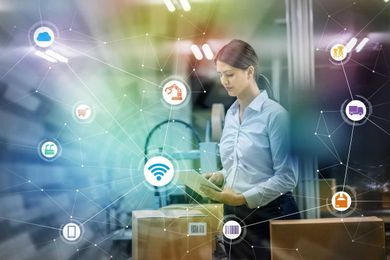
What Industry 4.0 means for Apparel, Fashion, and Footwear Manufacturers
The world is more connected than ever. The proliferation of ubiquitous mobile devices, sensor technology, and digital networking has made seamless connectivity something we take for granted. It’s also created a gold rush of data; data that organizations around the world have leveraged. First movers have spent years gathering and analyzing this data to understand their customers and their processes better. Digital transformation strategies have continued…
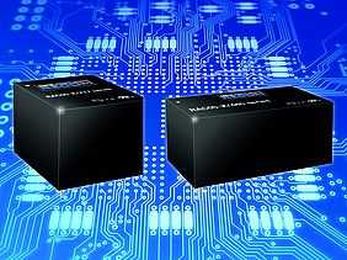
5 W AC-DC Modules Serve Industry 4.0 and IoT Needs
5 W AC-DC Modules Serve Industry 4.0 and IoT Needs
Ericsson's vision for cellular IoT, boosting Industry 4.0
Cellular IoT evolution leverages new capabilities using Broadband IoT and Industrial Automation IoT in Industry 4.0, on existing 4G and 5G LTE networks
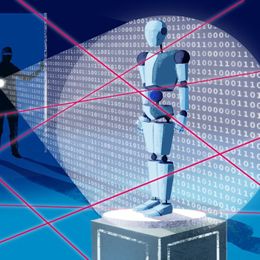
Industry 4.0 and cybersecurity
The fourth industrial revolution brings a new operational risk for smart manufacturers and digital supply networks: cyber. In the age of Industry 4.0, cybersecurity strategies should be secure, vigilant, and resilient, as well as fully integrated into organizational strategy from the start.
Quality 4.0: The Internet of Things is Only Half the Solution
You can’t escape the buzzwords. The Internet of Things. The Industrial Internet of Things. Edge Computing. Industry 4.0. Big. Data. Every practitioner has their own, slightly different definition of what these terms mean—a fuzzy cloud of vague meaning.

Why Should I Care About Industry 4.0?
Industry 4.0, Internet of Things, Industrial Internet of Things. These are some of the hottest buzzwords in the world of industrial technology...

How the Internet of Things and Smart Services Will Change Society
Join this free openSAP course and learn how the Internet of Things will forever change our personal and professional lives. By 2020, there will be 50 billion connected devices communicating through the Internet. Devices can range from connected coffee makers, cars, or sensors on cattle to connected machines in a production plant.

Industry 4.0 vs. the Industrial Internet: A Primer
If you haven’t been paying attention the last couple of years, you might just use those two terms interchangeably. No big deal, right? Wrong.

Edge devices as a key to Industry 4.0
The implementation of Industry 4.0 continues to focus on the linking of industrial production to the internet and the Cloud, and this has transformed the Internet of Things (IoT) into the Industrial Internet of Things (IIoT), according to Gavin Stoppel.

Hardware-Based Security: Taking Industry 4.0 To The Next Level
The Internet of Things (IoT) is connecting smart devices and machines to create smart factories (known as Industry 4.0 or Industrial Internet). These highly automated, decentralized factories promise greater efficiency and flexibility across production processes. At the same time they are also exposed to attacks from cyberspace as they rely on Internet connectivity. Software measures …

Answers to Industry 4.0’s Top Questions
We’re in the midst of an Industry 4.0 revolution. Automation and data – including cyber-physical systems, the Internet of Things, cloud computing, and cognitive computing – are leading to a shift i…

A Tale of Two IoT Initiatives: Industry 4.0 vs. the Rest of IoT
Machine Design heads back to Hannover Messe, birthplace of Industry 4.0, with hopes of determining just how much the Internet of Things has really accomplished.
