 Jnk Securities
Gramercy - New York:
Jnk Securities
Gramercy - New York:
As the lab-grown meat industry grows, scientists debate if it could exacerbate climate change
Since the lab-meat industry is in such early production stages, it's difficult to assess the actual carbon footprint of producing on a large scale.
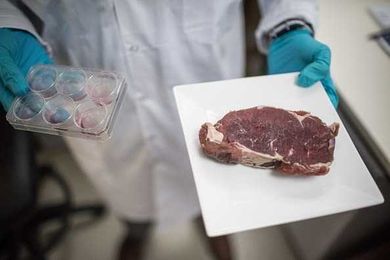
Lab-grown meat could be served up for dinner soon. What does it taste like?
The meatball tastes like meat, an accomplishment in itself.

Why humans are so bad at thinking about climate change
The biggest problem for the climate change fight isn’t technology – it’s human psychology. This is the first episode of Climate Lab, a six-part series produc...
Would your feelings about lab-grown meat change depending on how it was sold to you?
Lab-grown meat is only going to become a supermarket staple if it's something enough of us want to buy, so researchers are investigating how best to market it.

Maine lab to research kelp farming to combat climate change
EAST BOOTHBAY, Maine (AP) — A Maine science center has received a grant of almost $900,000 for research into ways that aquaculture of kelp can be used to combat climate change. Bigelow...

Seeds of sustainable future planted at third hydroponic school lab opening in Astoria
The seeds of a sustainable future have been planted at P.S. 84 – Steinway in Astoria, where Councilman Costa Constantinides helped opened a new hydroponic science lab on Jan. 14. “Environmental changes are increasingly making science a component of every industry, so we must make sure our leaders of tomorrow get the hands-on experience now …

While large markets like Europe and North America are showing declines in newspaper circulation and revenue, Latin America’s newspapers are growing. In 2013 Latin American newspapers grew by 2.56% in circulation, according to a study from the World Association of Newspapers and News Publishers (WAN-IFRA). In comparison, in 2013 newspaper circulation went down by 5.29% in North America, by nearly 10% in Australia and by 5%…
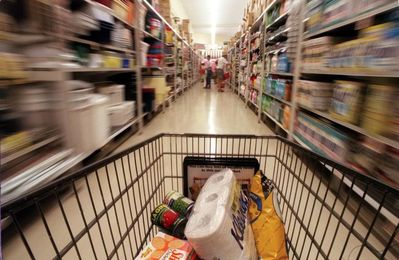
Climate Scientist Swaps NASA for School of the Art Institute
Meet Dr. Mika Tosca, a scientist who traded a job at NASA’s renowned Jet Propulsion Lab to teach climate science to art and design students in Chicago.
Milk Grown in a Lab Is Humane and Sustainable. But Can It Catch On?
A Silicon Valley vision: Instead of milking dairy cows, we could make milk in a lab with genetically engineered yeast.

Grist's intersectional climate fiction contest—w/ Tory Stephens of Fix, the Grist solutions lab
Making art about climate is useful in that it reaches a part of the brain that science does not. And climate fiction as a genre gives us a way to get the climate conversation started. Better yet, cli-fi that focuses on solutions might actually help us find a way forward.Tory Stephens is the New England Network Weaver at and explain what differentiates his team’s writing…

Lab-grown meat worse for environment
A new study has found that meat grown artificially in a lab could be worse for the environment than beef produced naturally in farming systems.

Confusion over future of CSIRO Melbourne lab as climate science moves to Hobart
The future of a major climate change laboratory in suburban Melbourne is in doubt after the national science agency announced it would cut hundreds of jobs and sets up a smaller global warming research centre in Tasmania.

During Earth Day week, here’s a nonscientific approach to climate change
There has been so much heated public discussion about climate change that it is hard for a person without scientific training to make heads or tails of the issue. Sure, some of the science is not subject to dispute. It is certain that burning fossil fuels, like coal, releases carbon dioxide into the atmosphere. A simple lab test will show that increasing the amount of a greenhouse gas in an air sample will increase the heat-holding capacity of the sample. And, we know…
