Results for Health And Medical Centers
Displaying posts 1 - 10 of 2828 in total-
- Type:
- Businesses
- Blogs

For decades, proponents of workplace health promotion (wellness) programs have articulated the many factors justifying a business case for investment in these initiatives. Among the arguments made in favor of building and sustaining a culture of health at work is that effective programs first and foremost improve workers’ health and well-being. Beyond that, the spillover effect of having healthy workers is they consume fewer healthcare resources…
Academic medical centers face some unique challenges and opportunities when it comes to implementing new strategies and competencies to prepare for the population health environment, according to a Q&A with Andrew Ziskind, MD, managing director for Huron Healthcare.

The wellbeing of our workforces is vitally important because it impacts both the top- and bottom-line performance of an organization. Programs that focus equally on the personal health of employees and their professional productivity needs are becoming essential to help companies attract and retain talent. This was the subject of a recent “Out Front Ideas with Kimberly and Mark” webinar. Our guests included: Fikry Isaac, MD…

What does it take to bring world class digital technology to one of the world’s leading medical centers?
Wellmont Health System hospitals and medical centers provide advanced medical care throughout communities in Northeast TN and Southwest VA.

Innovation is in vogue in many industries including health care. But what exactly is innovation? That is the issue hospitals and academic medical centers are g…

Apple will launch a group of internal health centers alongside a push to improve the health and wellness of its employees. The major consumer tech company quietly published a webpage for the program, called AC Wellness Network, which includes a description of the company’s goals as well as information about a number of open positions.
Share on: With the recent news that health spending is flattening out, my first reaction was to think it was a positive sign that the economy was getting back on track. According to an article I read in this past Sunday's New York Times, "In 2009 and 2010, total nationwide health care spending grew less than 4 percent a year, the slowest annual pace in more than five decades, according to the latest numbers from the Centers for Medicaid and Medicare Services." But…

Peter Ubel has written a book about the economics of health care — and he thinks there may be a few lessons for higher ed in there as well.
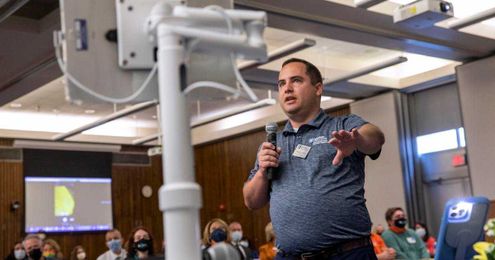
"They'll see the patient's body in real time .. and make sure they don't miss an opportunity to collect evidence. Because we don't get another moment to get that," Dr.
