Results for Environmental Conservation Ecological Services
Displaying posts 1 - 10 of 28 in total-
- Type:
- Businesses
- Blogs

A U.S. Fish and Wildlife Service blog about wildlife and environmental conservation in the Northeast.
Post Carbon Fellow Bill Ryerson’s introduction to the new book OVERdevelopment, OVERpopulation, OVERshoot . MOST CONVERSATIONS ABOUT POPULATION begin with statistics—demographic data, fertility rates in this or that region, the latest reports on malnutrition, deforestation, biodiversity loss, climate change, and so on. Such data, while useful, fails to generate mass concern about the fundamental issue affecting the future of the Earth. In reality, every discussion about…
Neha Sethi has just been named the Earth Journalism Scholar for 2015. Earth Journalism Scholars attend the UC Berkeley (UCB) Graduate School of Journalism in the spring semester, through a partnership between Internews’ Earth Journalism Network (EJN) and UCB. Courses include the graduate-level Earth Journalism course on international environmental reporting, co-taught by EJN Executive Director James Fahn. Sethi was selected from more than 80 applicants in…
Meet our students! The ESUR IGERT program is no longer accepting applications. ESUR is an Integrative Graduate Education and Research Traineeship (IGERT) award by the National Science Foundation and a program of PSU's Institute for Sustainable Solutions Societies around the globe face perplexing questions about how to manage our natural systems in ways that best support rapidly expanding urban areas. For example: How do we minimize…
Welcome to the home page for Environmental Law, the nation’s oldest law review dedicated solely to environmental issues. Environmental Law is a premier legal forum for environmental and natural resources scholarship. Environmental Law is published quarterly by the students of Lewis & Clark Law School, 10015 S.W. Terwilliger Blvd., Portland, OR 97219, in the Spring, Summer, Fall, and Winter. The views expressed in the volumes do…
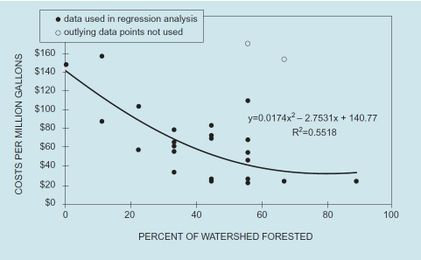
Forests and Drinking Water Forests capture rainfall and replenish and cleanse our water supply. Although these ecological services provided by forests are widely accepted in the scientific community, they have not really been translated into the language that most often drives planning and land use decisions at the local level: dollars. Local government officials often make tough decisions about growth at the expense of natural resource…
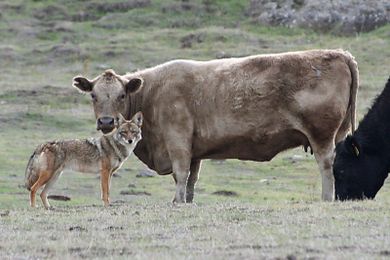
As the population grows, so does demand for food; it is no wonder that the meat industry and the heavy inputs its products require is putting increased pressure on the planet. And as agricultural borders expand in the name of livestock production, humans are butting heads with local predators faced with shrinking habitat and prey availabilities. This war with nature is leading to impassioned discussions on…
What is good for the environment can also be profitable for livestock producers. “By intensively managing grazing, producers can make money converting marginally productive cropland back to grassland, while at the same time reducing agriculture’s impact on the environment,” said South Dakota State University associate professor Tong Wang. “Grasses prevent soil erosion and their root systems penetrate the ground, increasing water infiltration and decreasing runoff and…
Peter Gleick knows water. An environmental scientist and communicator and co-founder of the Pacific Institute , the MacArthur "genius" fellow and member of the U.S. National Academy of the Sciences is an expert on the connections between water, energy, food and health; the impacts of climate change; and international conflicts over water resources. In 2008, Wired Magazine named Dr. Gleick "one of 15 people the next…

Their soil science curriculum has a Wisconsin connection in that two staff members of Applied Ecological Services in Brodhead, WI were on the project team that wrote the plan. One of those staff is also the President of the Lower Sugar River Watershed Association. Additionally, staff from the University of Wisconsin and Green County Land Conservation Department acted as reviewers on the curriculum. Through donation, America's…
